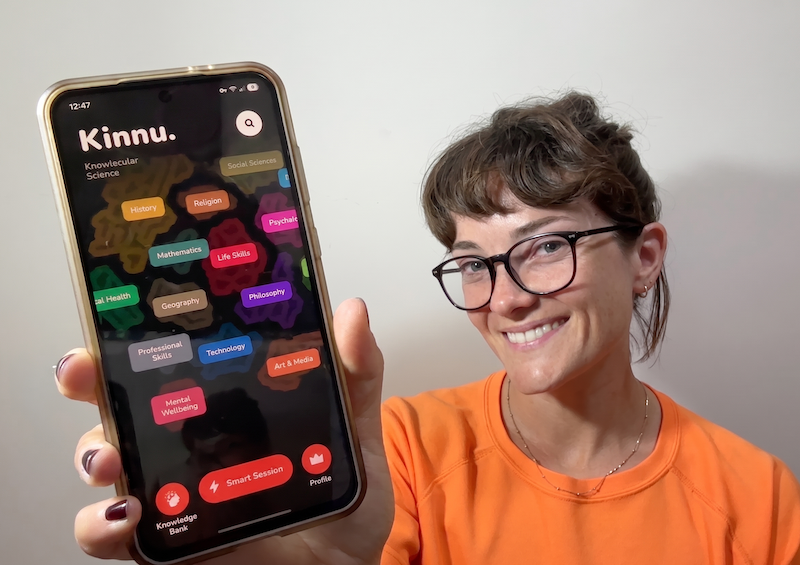
Summer is the one time of year most of us actually have the breathing room to learn something new. There are no deadlines, no semester schedules, and no excuses not to finally pick up that language, coding skill, or subject you've been putting off. The problem is that most learning apps are either boring or too expensive to justify using.
After downloading and testing 10 different apps myself, these are the six best apps for learning a new skill this summer. I was a teacher for 10 years, so I know a useful learning tool when I see one. Plus, all of these apps are completely free to use. Brush up on business strategy or keep up to date with the latest discoveries—all it takes is five minutes a day.
Do you have enough data for the whole summer?
Video lessons, audio content, and syncing your progress across devices all add up. If you're learning on the go or away from Wi-Fi, your data can disappear faster than expected. If you're on a limited plan, keep an eye on your usage—or upgrade to an unlimited plan so it's never a concern.
Here are the most popular unlimited data options available today:
|
Fido

$50 Data, Talk & Text Plan with 60GB - Entry
$50.00/mth
with Auto-Pay discount
|
|
Fido
$50 Data, Talk & Text Plan with 60GB - Entry
$50.00/mth
with Auto-Pay discount
|
|
Freedom Mobile

$40 5G+ Unlimited 70GB CA-US plan
$40.00/mth
(after Digital Discount)
|
Best apps for learning at a glance
| App | Available for | Best for |
|---|---|---|
| Kinnu | iOS, Android | Deep diving into any topic, especially business skills |
| Memrise | iOS, Android, web | Learning a language with AI conversation practice |
| Blinkist | iOS, Android, web | Short sessions about anything in 15–30 minutes a day |
| Drops | iOS, Android | Building vocabulary in a new language fast |
| Sololearn | iOS, Android | Learning to code by actually writing code |
| Sketch a Day | iOS, Android | Daily drawing with a supportive community |
1. Kinnu: The best free learning app you'll ever need
- Free
- Available for iOS and Android
Kinnu is the best learning app I've ever tested—and I taught high school for 10 years.
The concept is simple; all you have to do is pick a topic and work through a structured lesson plan broken into bite-sized segments called Orbs. Each Orb covers a few paragraphs of content (which you can read or listen to) followed by questions to check your understanding. The idea is that you complete one Orb per day, so the commitment is manageable no matter how busy your summer gets. To make it official, you get a certificate when you finish the whole lesson plan.
The topic library is one of the best reasons to download Kinnu, especially if you haven't yet decided what you want to learn.
Browsing through the topics feels a little like wandering through a good bookshop—you go in looking for one thing and come out with five tabs open.
I found courses on gut health, behavioural economics, hair science, the history of fashion, personal finance, ancient Rome, climate change, and cryptocurrency, and that's just scratching the surface. If you have even a vague curiosity about something, Kinnu probably has a structured course on it.
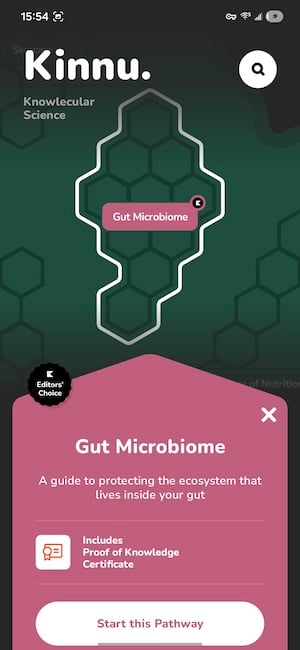
Image: Jessica Santero | WhistleOut
I went through a full lesson plan on the gut microbiome, which ran about 30 sessions. I loved every single one. As a longtime teacher, I recognized immediately how effective Kinnu's approach to real learning actually is. It's built around clear objectives, deliberate repetition, and adaptability—the same principles that separate a great lesson plan from a forgettable one. You're not just reading information and hoping it sticks. Kinnu checks that you've absorbed it before letting you move on.
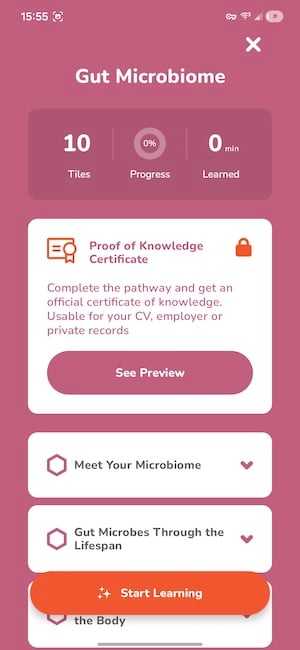
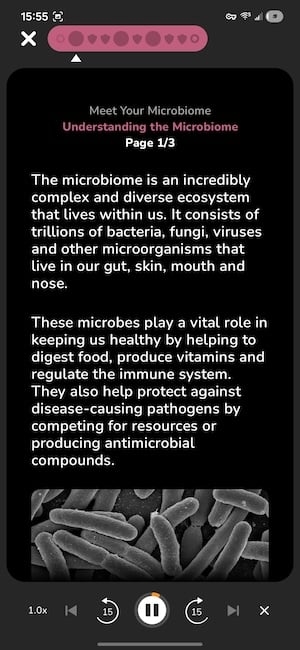
Image: Jessica Santero | WhistleOut
I'm already keeping this app and recommending it to everyone I know who has even a passing interest in learning something new. But there is one caveat to keep in mind: Kinnu takes up about 90MB of storage, which is on the heavier side for a learning app. Make sure you've got the space before you download, or consider upgrading to a phone with more storage.
What Reddit says about Kinnu
Redditors in r/Hobbies have called it one of the most underrated apps in the learning space, with u/ixj45 noting, "Kinnu is basically what happens if Duolingo and Wikipedia had a baby. It gamifies actual knowledge instead of just vocabulary, making it the perfect replacement for when I'm tempted to doomscroll."
2. Memrise: The language app that talks back
- Free
- Available for iOS and Android
Memrise is a no-frills, no-cartoon-owl language app that actually works.
It covers language-learning essentials (like flashcards, typing exercises, and pronunciation practice) without any of the gamified fluff that makes other apps feel like a mobile game pretending to teach you French. Plus, it's the only app for languages that uses conversational AI to chat—no typing required.
Memrise features Podchats, which are AI conversations where you speak directly into your microphone and an AI responds in the language you're learning. You choose your difficulty level (beginner through expert) and pick a topic that interests you, such as food and drink or travel. The AI then chats with you in real time.
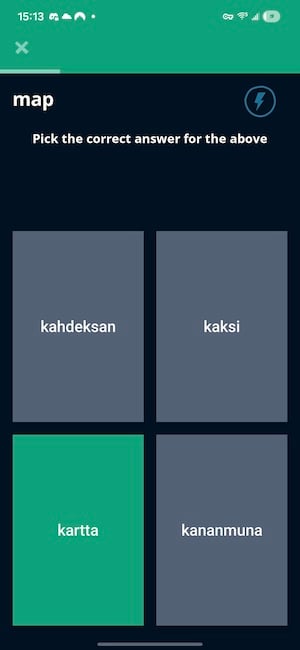
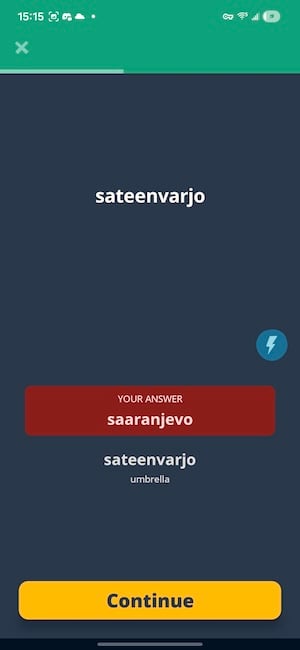
Image: Jessica Santero | WhistleOut
It's a real test of your pronunciation because the software itself has to understand what you've said—a much higher bar than tapping the right answer from a list. Your free account comes with three tokens to try it, but unlimited access is only available with a premium upgrade. Test it out and see if you like it before committing.
Put your accent to the test with Memrise’s AI chat.
Memrise has hundreds of languages to choose from, and the free version covers the full learning experience. You'll need to create an account with your email to get started, which takes about a minute. I decided to try out Finnish and after 5 minutes could say and spell charger, umbrella, rail ticket, and bathroom. Needless to say, it took me quite a few tries to get those four words right.
The Podchat AI conversation feature is currently only available for English learners, so if you're a native English speaker learning another language, you won't have access to it on the free tier.
What Reddit says about Memrise
Memrise is heavy on flashcards and repeated vocabulary, which Redditors appreciate. u/Ning_Yu in r/languagelearning said, "Many language courses are great, but not the best. I could never get into Anki but always loved Memrise for spaced repetition."
Memrise isn't the only language learning app I've tested. Check out our guide to the best translation apps for more native-like learning.
3. Blinkist: One free lesson on almost anything, every single day

- Free
- Available for iOS and Android
Blinkist is by far the most practical app on this list. It's like a podcast but with the curated narration of an audiobook.
Every day, the free version gives you one Blink (an audio summary of a nonfiction book that runs anywhere from 10 to 30 minutes). You don't get to choose the topic, but the range is broad and anything but boring. It covers personal finance, health and meditation, branding, psychology, history, leadership, and plenty more.
I've been listening on my morning walks, coffee in hand, and it's become one of my favorite parts of the day. The last Blink I listened to was Designing Brand Identity, which explored how branding works and why it matters—surprisingly relevant for anyone who works at a company of more than a handful of people. Just press play, lock in, and 20 minutes later, you've learned something new. The app is comfortable and low-friction since there aren't any menus to navigate or search bar headaches.
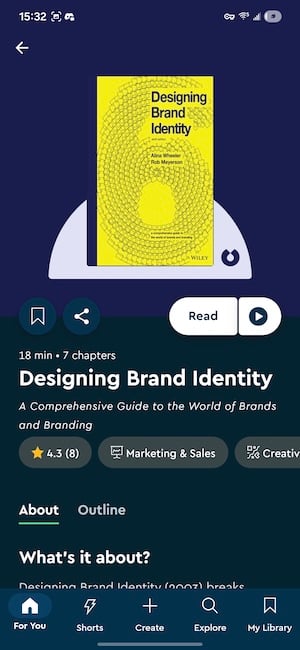
Image: Jessica Santero | WhistleOut
You do need to create a free account with your email to get started. There are also additional free Blinks available beyond the daily pick, so give the library a browse to see if anything jumps out at you. The concept of this app is based on consistency—one Blink a day, every day, adds up faster than you'd expect. Unlimited access to the full library requires a paid subscription, but the free version alone is worth having on your phone.
What Reddit says about Blinkist
You can enjoy the Blink or use it to decide whether to buy the whole book. u/p_user_2022 in r/Blinkist explained their approach, saying, "I have three books on my list right now that I'll get the gist of in about 15–20 minutes… it's a great 'filtering tool' to see if I want to read the entire book."
Unlock unlimited learning with cheaper data
If you haven't checked your phone bill lately, now's a good time. Smaller carriers called MVNOs run on the exact same networks as the Big Three—just at a fraction of the price. You could cut your monthly bill in half just by switching, all without sacrificing data.
Here are some of the most popular and affordable plans right now:
|
PC Mobile

$19 Unlimited Talk & Text
$19.00
Per 1 Month Top-up
+ $10 Upfront
|
|
Bell

Monthly $20 Prepaid Voice
$20.00
Per 1 Month Top-up
+ $10 Upfront
|
|
SaskTel

noSTRINGS Talk, Text & Data 30
$20.00
Per 1 Month Top-up
(includes $10/mo. off for 12 months)
|
|
Bell
Monthly $20 Prepaid Voice
$20.00
Per 1 Month Top-up
+ $10 Upfront
|
|
Fizz

Unlimited Minutes & Text Messaging + 3GB Data
$21.00/mth
+ $15 Upfront
|
4. Drops: Learn a new language in five minutes a day

- Free (5 minutes/day)
- Available for iOS and Android
Drops is brought to you by the adrenaline-inducing quiz game Kahoot!, and it shows in the best possible way.
It's colourful, interactive, and designed to make vocabulary practice feel like something you want to do rather than something you have to. Instead of translating words from a list, you drag and swipe your way through illustrated vocabulary sets that associate each word with a visual rather than a definition. It sounds simple, and it is, but that's exactly why it works.
I tested Drops with ASL (American Sign Language), which isn't a combination you'd expect from a language app. It walked me through the alphabet by having me drag hand gesture illustrations to the correct letters—intuitive, tactile, and effective. I could easily see myself doing five minutes a day while brushing my teeth and actually retaining something by the end of the week.
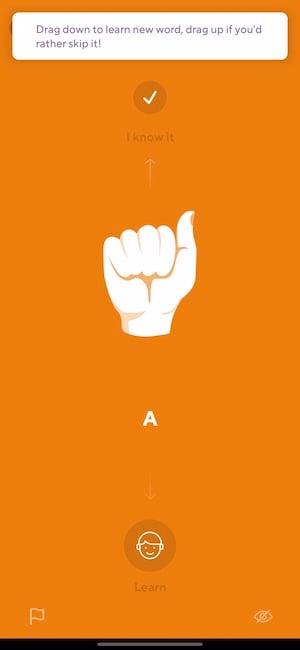
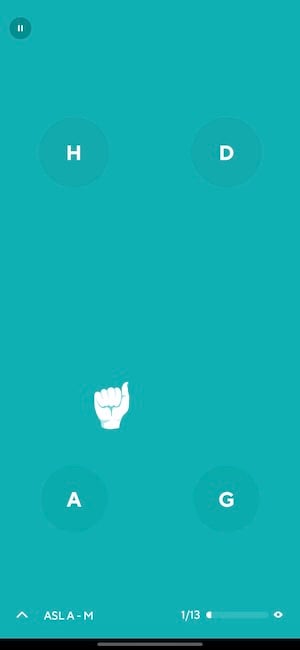
Image: Jessica Santero | WhistleOut
The free version limits you to five minutes of learning per day, which unlocks the next Drop every 10 hours. I was a little frustrated at first, and wanted to complete more lessons. But that's the beauty of the app—you don't burn out after one intense session of learning, only to never open the app again. Drops keeps you consistent with five minutes a day. You'll need to create an account with your email to get started, but you won't regret it.
What Reddit says about Drops
u/jonstoppable in r/ENGLISH was struggling with learning a new language and found Drops' approach to vocabulary refreshing, sharing, "I credit [Drops] with really making a difference with my Turkish vocabulary as a beginner (grammar not so much, for me)."
5. Sololearn: Learn to code by actually writing code
- Free (ad-supported)
- Available for iOS and Android
Sololearn is a practical option for learning to code, and it's free.
When you start a course, you choose whether to approach it from the theory side or the practical (logic) side, a smart distinction that most coding apps skip entirely. I chose to learn Python in practice mode, and that's exactly what it had me doing from the first lesson. I was writing actual Python code right away, using real commands and structure rather than just reading about how it works.
Sololearn's hands-on approach sets it apart from many theory-heavy alternatives. You don't spend five lessons learning what a variable is before you get to use one. With Sololearn, you learn by doing, which means things stick in a way that passive reading rarely achieves. The course structure is clear, and the progression feels logical, making it easy to build on what you covered the day before.
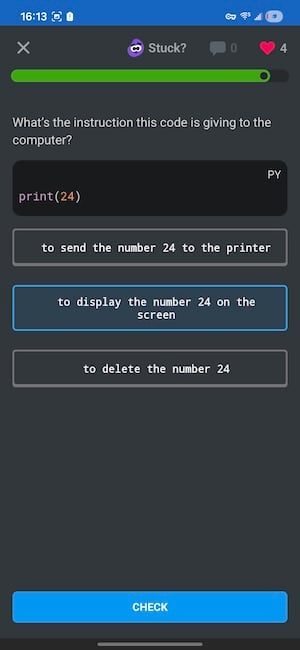
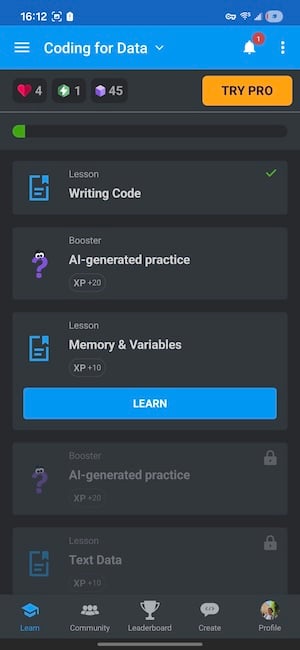
Image: Jessica Santero | WhistleOut
Sololearn's free version is great, but you do get an ad every few lessons. They're not constant enough to be a dealbreaker, but they do interrupt the flow at a pace you'll notice over a long session. The learning itself is solid enough to put up with, so just wait it out and tap skip.
What Reddit says about Sololearn
Redditors in r/learnprogramming consistently recommend Sololearn as a strong starting point for beginners. In fact, u/IIIIIlIIIIIlIIIII explains, "There is a streak system (like in Snapchat) which for me was the reason why I learned every day instead of every weekend. This is the ideal place for beginners like me to start learning to code."
A new Android phone makes every app better
Slow load times and laggy performance are especially frustrating when you're mid-lesson and trying to stay focused. If your current Android is showing its age, it might be time for an upgrade. A newer device doesn't just run apps faster—it makes the whole experience smoother.
Check out the best Android phone deals available right now:
Pixel 10a 128GB
- 6.3 inch display
- Rear Cameras: 48MP, 13MP
- Front Camera: 13MP
Galaxy S26 FE 5G 128GB
- 6.7 inch display
- Rear Cameras: 50MP, 12MP, 8MP
- Front Camera: 12MP

Galaxy S26 FE 5G 256GB
- 6.7 inch display
- Rear Cameras: 50MP, 12MP, 8MP
- Front Camera: 12MP

Pixel 11 256GB
- 6.3 inch display
- Rear Cameras: 48MP, 10.8MP, 13MP
- Front Camera: 13MP

Galaxy S26 5G 256GB
- 6.3 inch display
- Rear Cameras: 50MP, 10MP, 12MP
- Front Camera: 12MP

6. Sketch a Day: Learn to draw with daily prompts and zero pressure
- Free
- Available for iOS and Android
I've always wanted to learn how to draw but could never get past the first obstacle: not knowing what to draw.
Sketch a Day solves that problem by giving you a daily prompt and inviting you into a creative community where nobody is there to judge. I've never been so inspired by so many talented people, and yet so comfortable sharing something imperfect alongside them. Each daily challenge is based on a single word that the artist interprets and depicts. My personal favourite was "Plastic" since every image was original, from plastic toys to hyperrealistic plastic materials.
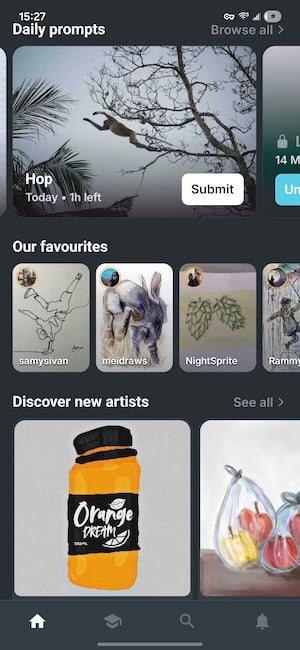
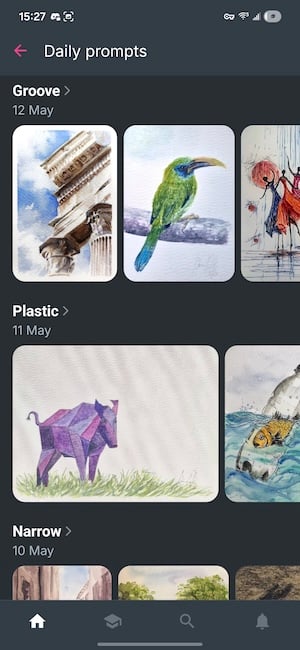
Image: Jessica Santero | WhistleOut
That's all there is to it. Get your prompt, make your sketch, and share it if you want to. All you need is a pencil and paper. You can scroll through what other people submitted to the same prompt and appreciate the full range of styles and skill levels. You won't find any negative comments, and there are no prerequisites for artistic ability. The community welcomes everyone, creating a safe space to share your art.
There are also tutorials built into the app to help you get more comfortable with different techniques if you're starting from scratch. What I appreciated most is that Sketch a Day encourages you to step away from your screen and back into your own imagination.
This is your sign to have a Sketch A Day summer. It's a good habit that doesn't cost anything and reduces your screentime.
What Reddit says about Sketch a Day
u/ArtisticHabit_94 stumbled across Sketch a Day in r/Hobbies asking for apps that teach you a skill or keep you entertained, and their review stood out from the rest. After using it consistently, they shared: "It got me into the habit of drawing instead of bingeing TV… even when I quickly scribble a drawing, I still get likes because the community is wonderful."
Foldable phones are bigger art canvases
The daily prompts are fun on any screen, but open up a foldable and suddenly you have a canvas that's actually worth drawing on. The larger unfolded display gives you real estate to work with, whether you're sketching with a stylus or your finger, or sitting down with a sketchpad.
Check out the most popular foldable phones on the market right now:
Pixel 10a 128GB
- 6.3 inch display
- Rear Cameras: 48MP, 13MP
- Front Camera: 13MP
Galaxy S26 FE 5G 128GB
- 6.7 inch display
- Rear Cameras: 50MP, 12MP, 8MP
- Front Camera: 12MP
Galaxy S26 FE 5G 256GB
- 6.7 inch display
- Rear Cameras: 50MP, 12MP, 8MP
- Front Camera: 12MP
Pixel 11 256GB
- 6.3 inch display
- Rear Cameras: 48MP, 10.8MP, 13MP
- Front Camera: 13MP
Galaxy S26 5G 256GB
- 6.3 inch display
- Rear Cameras: 50MP, 10MP, 12MP
- Front Camera: 12MP
How to pick the right app for your summer goals
Every app on this list is free to try, so the best move is to download whichever fits your goal and give it two weeks of consistent daily use. Here's a quick guide to the time commitments each learning app requires.
Best app by learning goal
| App | Daily time needed |
|---|---|
| Kinnu | One Orb a day (about 10 min) |
| Memrise | 10–15 minutes |
| Drops | 10–15 minutes |
| Blinkist | 10–30 minutes per Blink |
| Sololearn | 15–20 minutes |
| Sketch a Day | As long or short as you want |
 How I tested these apps
I downloaded 10 different apps and tested them over two weeks, completing at least one full week of daily sessions on each. For every app, I evaluated its ease of onboarding, free tier depth, content quality, lesson structure, and (most importantly) whether I actually wanted to open it again the next day.
The other popular learning apps I tried but didn't make the cut were: Befreed, since it requires a paid subscription; Elevate, since the free version was too limited to use seriously; Deepstash, since it also sits behind a paywall; and Mimo, because it's very expensive.
Apps to learn skills: FAQ
What is the best app to learn new skills?
Kinnu is the best all-around learning app available right now, and it's completely free. It covers a wide range of topics, uses a structured lesson format that checks your understanding as you go, and is genuinely designed to help things stick rather than just scroll past them.
What is the fastest way to learn a new skill?
Using an app like Drops or Blinkist is the fastest way to learn a new skill. They include short, concentrated sessions to help you learn quickly.
Where can I learn new skills for free?
Every app on this list has a free tier that's actually usable, not just a trial. Kinnu, Memrise, Blinkist, Drops, Sololearn, and Sketch a Day all let you learn consistently without paying anything.
Which apps are best for learning business or communication skills?
Blinkist is the best option for business and communication. Its library is heavy on leadership, productivity, psychology, and career development titles. Kinnu also covers business topics in its course library if you prefer a more structured, lesson-based format rather than audio summaries.
Do learning apps use a lot of data?
It depends on the app. Blinkist's audio Blinks use roughly 30–60MB per session. Memrise uses a bit more if you're accessing video-based features. Drops and Sketch a Day are both minimal data users.
Jessica Santero
Staff Writer

Thousands of cell phone plans unpacked. All the facts. No surprises.
Related Articles



Find Better Phones and Plans
Hundreds of cell phone plans unpacked. All the facts. No surprises.